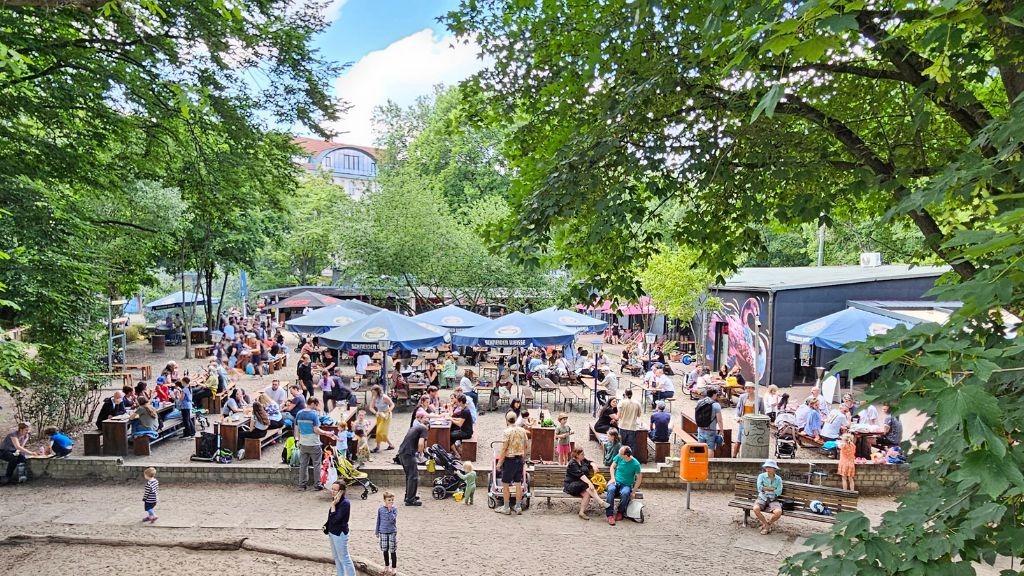
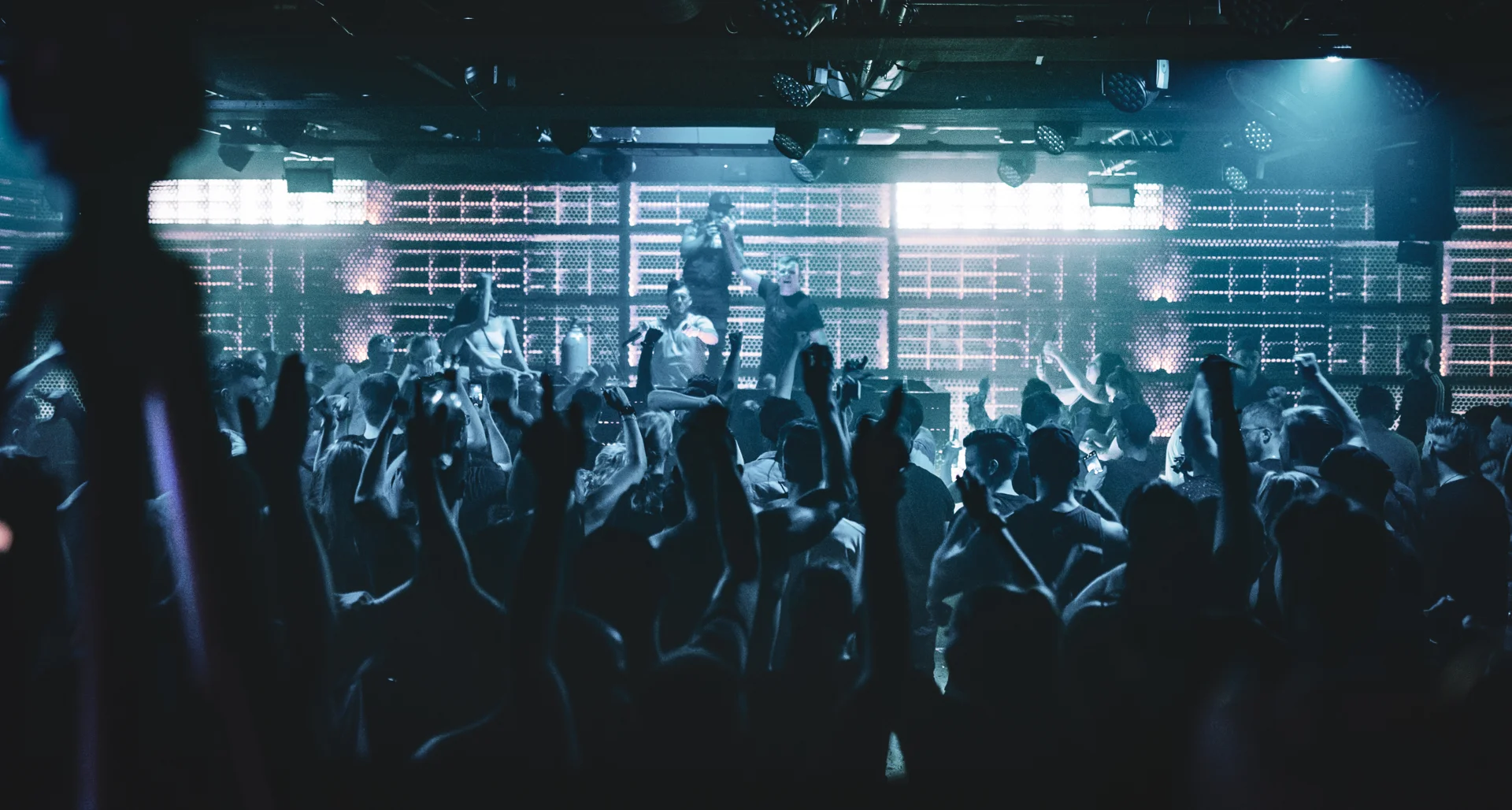
Berlin never installed the clock the rest of Europe runs on. Bars here close when they close — the law permits no closing time at all since 2002 — and the night has no fixed starting gun: some rooms fill at eight, some at two, and both are on time. The city's evening is not an event you attend but a condition you enter, at your own pace, with a beer from the corner shop as the only ticket.
This is a guide to that unclocked evening: the Späti stoop as the civic living room, the Kieznacht that keeps every district on its own time, the clubs that treat the sunrise as an intermission, and the U-Bahn that runs the whole night on weekends so the city never has to go home.
The Späti stoop is the civic centre
Every Berlin evening starts at the same address: the corner shop that stays open late, with its cooler of bottled beer sold at shop prices and its pavement outside sold at none. The stoop — kerb, step, crate turned over — is where the night is negotiated: who is out, where the night is going, and whether it has started yet. Formal bars charge for the same thing the Späti gives away: a place to stand with your friends and watch the district go by.
- The Späti run before anything else — bottles colder than any bar's and a kerb with the best people-watching in the district.
- The unmarked door on the quiet street — the best rooms in Berlin are the ones whose signs never got made.
- The Sunday-morning U-Bahn home — the weekend night network runs the whole night through, and the sunrise ride is part of the evening.
- The Kieznacht rhythm — each district keeps its own hour, so the night is a route through time zones, not a single clock.
The Kieznacht keeps district time
Berlin is not one night but a chain of small ones. Kreuzberg pours at nine and dances at one; Friedrichshain waits until midnight to open its serious rooms; Wedding eats early and goes to bed respectable; Neukölln does all of it at once. Moving between districts is time travel — leave one at eleven and arrive in another where the evening is still setting the table. The locals plan the night like a rail journey between time zones.
Berlin doesn't have a night. It has a relay — and every district passes the baton an hour later than the last.
What the plan should hold
The Berlin evening is a drift with anchors: the Späti stoop to open, one unmarked door when the kerb conversation finds its direction, a late kitchen when the hunger arrives, and the U-Bahn home whenever it ends — the timetable will still be there. Hand the order to the concierge — “a Berlin evening: a Späti start, a bar with no sign, the sunrise train home” — and get the night as one route with the hours checked against what is actually open. Rewrite any stop in your own words and the evening re-knits.
Tell the concierge how the night should drift — Späti first, an unmarked door after, the sunrise U-Bahn home — and get a Berlin evening planned on the city's own borrowed time.
Plan my Berlin evening